












Monorail

Globim's monorail projects are driven by the need to assist Government alleviate social pressures to move passengers efficiently through urban areas. Globim believes that any new people-mover transportation system must be reasonable in implementation with affordable fare structures that is competitive with the current road transport. Therefore, Governments must view transportation systems going forward as self-sufficient businesses and revenue-generators for their jusidictions and not an added burden to the taxpayer.

Globim has developed a profitable business model approach to monorail systems that will put money in your pocket rather than be subsidized as is the case with almost all transit people-mover systems worldwide. Let Globim show you the way.
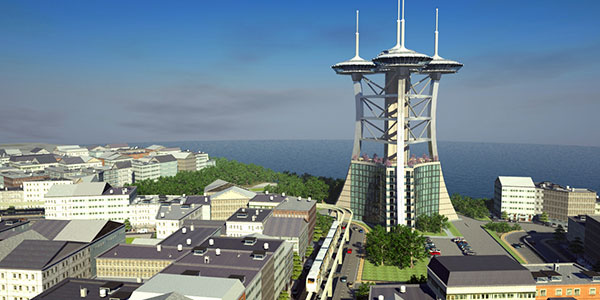
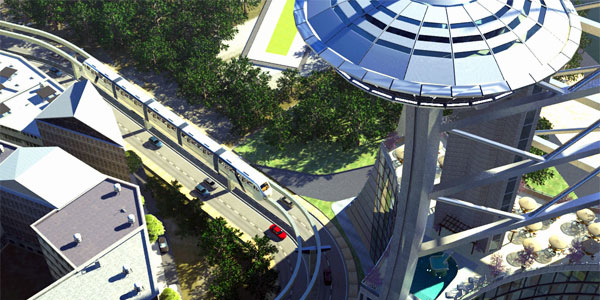
Najaf, Iraq Monorail Sytem

Najaf is a city in Iraq about 160 km south of Baghdad and is the second largest city in Iraq with an estimated population in 2008 of 1.2 million. Najaf is one of the holiest cities of Shia Islam as it is the home to the shrine of Imam Ali, Prophet Muhammad's martyred son-in-law. It is also the center of Shia political power in Iraq. The shrine of Imam Ali is the third holiest in the world for Shia Muslims and a major place of pilgrimage. The population of Iraq is estimated at 30 million and the major cities are Baghdad to the north and Basra to the south of Najaf. The main group within Iraq are the Shias who comprise 65% of the population. Up to 15 percent of the world’s 1.5 billion Muslims are Shi'ite and over 60 million reside in neighbouring Iran who plan to increase the number of pilgrims visiting Holy Shi'ite sites in Iraq each year to 3 million.

On June 20, 2008, Najaf International Airport opened its doors to the first international flights directly into the holy city, a move which will increase the number of pilgrims that visit the Holy city of Najaf and neighbouring Kerbala. Metro Najaf is served by an under-developed and over used road network. There are no major highways within the city except one major artery that links the city to Kerbala in the south and Baghdad to the north. The dominant feature of the economic landscape is tourism, more specifically religious tourism to the Holy Mosque of Imam Ali and to the mosques of Kufa and Sahla.

Currently, Najaf hosts more than 5,000 visitors per day Saturday to Wednesday peaking to 20,000 visitors per day on the weekend (Thursday/Friday). On 20 major nights of the year, the city is host to over one million people per day. The net result is a pilgrim target market of approximately 70 million people annually. The region has enjoyed relative stability compared to city's to the North since the collapse of the pervious regime. This has allowed for rapid economic and employment growth.

In February 2010, the investment commission in Najaf signed a memorandum of understanding (MoU) with a group of Korean and Iraqi companies to extract oil and conduct infrastructure projects worth over $22 billion U.S. dollars in the province. The project is expected to produce 400,000 barrels of oil per day and will provide the province with $400 million a year per Najaf Governor Adnan al-Zurfi.

System Specifications

  • 37 km (of equivalent single track) monorail linking the three major mosques in Najaf; Imam Ali, Kufa, and Sahla, and linking the two main bus depots
  • Next phase will link the monorail to the new Najaf airport and further extension within the city of Najaf
  • Project entails finance, survey, design, construction, and operating the line
  • Concession period - 30 years
  • All guideway components will be pre-cast and assembled on site
  • Initially 5-6 minute headway between trains, moving to 2-3 minutes in heavy usage periods
  • Train capacity 400 to 420 people per train travelling 35 to 80 km/hr depending on station distance
  • Trains will be powered on a straddle system
  • Guideway design will accommodate blast protection
  • Project timelines 24 months to build after completion of survey and design
  • Total estimated project time: 30 – 36 months

Enugu, Nigeria Monorail Sytem

The word "Enugu" means "the top of the hill". It is also a mining town with significant coal deposits. From being the capital of the Southern Provinces, Enugu became the capital of the Eastern Region (now divided into nine States), then the capital of East Central State, Anambra State, (old) Enugu State, and now the capital of the present Enugu State through a process of state creation and diffusion of administrative authority. As a result, Enugu has a wealth of Nigerian Government investment in its infrastructure and institutions including those higher learning. Enugu has a significant number of Universities and technical institutes and secondary schools. Therefore, Enugu is still viewed as the de facto capital of the Eastern region of Nigeria.

Enugu, the capital city of Enugu State is approximately 2-1/2 driving hours away from Port Harcourt, Calabar and Warri, all coastal cities with major shipping ports. Enugu is also located within an hour’s drive from Onitsha, one of the biggest commercial cities in Africa and 2 hours’ drive from Aba, another very large commercial city , both of which are trading centres in Nigeria. The city is also located within 5 driving hours from Abuja and 7 driving hours from Lagos, the administrative and commercial headquarters of Nigeria respectively. The average temp in this city is mild (warm) all year round and good for outdoor activities with family and friends.

The mean temperature in Enugu State in the hottest month of February is about 97.16 °F (36.20 °C), while the lowest temperatures occur in the month of November, reaching 68.54 °F (20.30 °C). The lowest rainfall of about 0.16 cubic centimetres (0.0098 cu in) is normal in February, while the highest is about 35.7 cubic centimetres (2.18 cu in) in July.

System Specifications

  • 41 km (of equivalent single track) monorail running from Abakpa Nike through Abakaliki Road and Okpara Avenue to UNTH and through Coal Camp to Agbani Road to Enugu-Umuahia Express Way
  • Next phase will link the monorail to the cities of Emene, New Haven and Uwani
  • Project entails finance, survey, design, construction, and operating the line
  • Concession period - 30 years
  • All guideway components will be pre-cast and assembled on site
  • Initially 5-6 minute headway between trains
  • Train capacity 400 to 420 people per train travelling 35 to 80 km/hr depending on station distance
  • Trains will be powered on a straddle system
  • Project timelines 30 months to build after completion of survey and design
  • Total estimated project time: 36 – 42 months